
Oaxaca food
Eating Insects in Oaxaca: Four You Should Try
Insects are not a dare in Oaxaca. They are food with seasons, prices and strong opinions attached — sold by the bag in the markets, piled onto tacos, ground into salsas and, in the case of chicatanas and escamoles, worked into the tasting menus of the city’s most ambitious kitchens. Four are worth seeking out, and each arrives at a different point in the year.
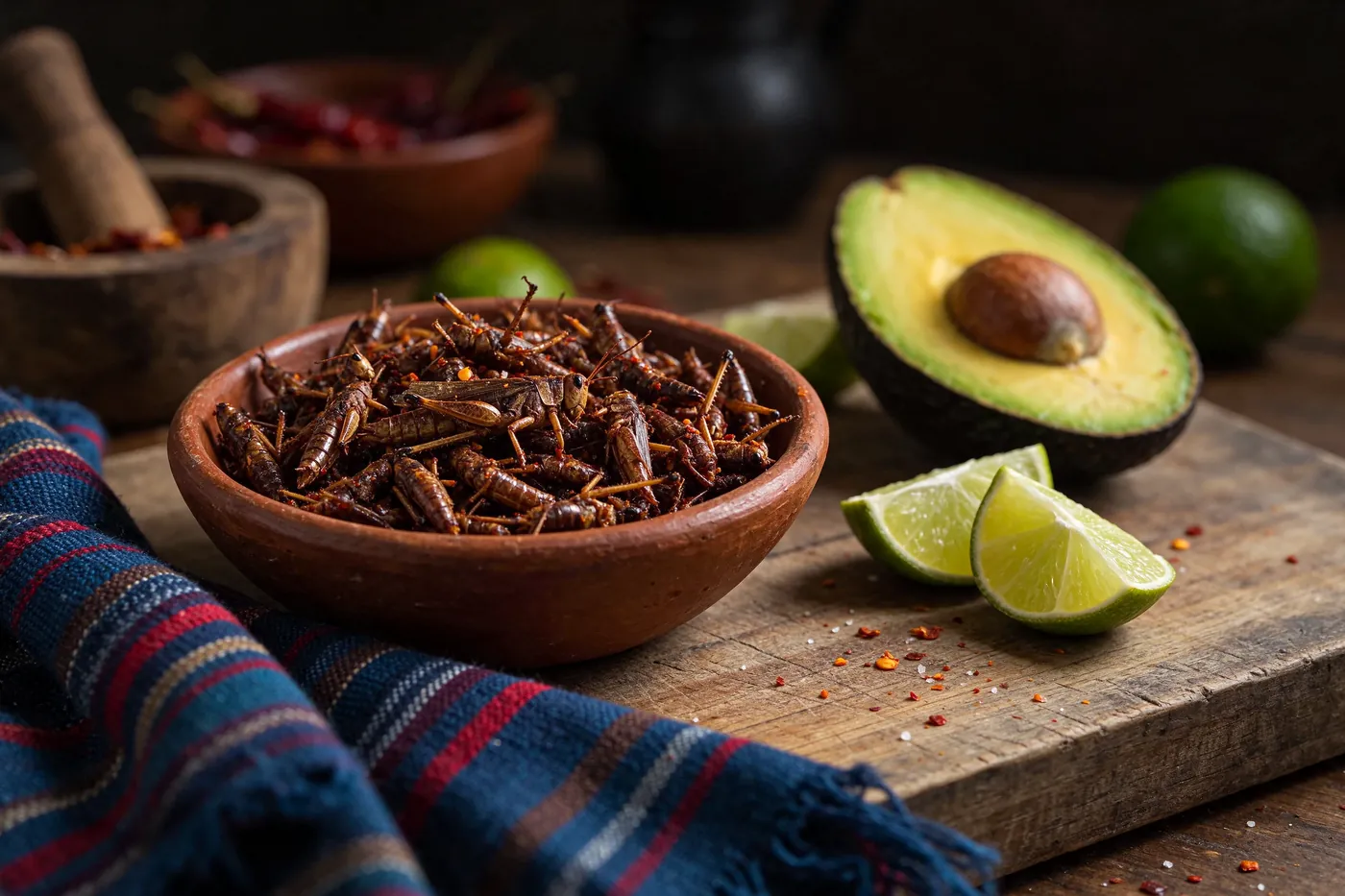
Walk the aisle of Mercado Benito Juárez or Mercado 20 de Noviembre and you will find them within a minute of the entrance: heaped in woven baskets and scooped into clear bags, some pale and plain, some brick-red with chile. Insect protein is a lean food, and it has been part of the diet in this part of Mexico since long before anyone thought to put it in a protein bar. What surprises visitors is not that Oaxacans eat insects. It is how much care goes into cooking them.
Chapulines: the one you will meet first
Grasshoppers of the genus Sphenarium, most of them from Oaxaca itself or the region around Puebla, where producers have refined the harvesting. The season runs from May until late October. They are boiled, then fried, then seasoned — with chile, lime and garlic, or with nothing at all — and the salt used in the process gives them a long shelf life, so a good market stall will have them year-round.
You will see them on tacos and quesadillas, scattered over guacamole, and in cantinas as the snack that arrives with a beer. Sizes and seasonings vary from basket to basket, and the difference between a fresh, crisp chapulín and a tired one is obvious on the first bite. Ask for a taste. Vendors in the markets almost always offer, and taking them up on it is the fastest way to learn what you like.
There is a local saying worth knowing: eat chapulines and you will return to Oaxaca. It is said with a smile, but it is also said often.
Chicatanas: the flying ants of the first rains
For a few weeks each summer, just after the first heavy rain, swarms of leaf-cutter ants leave their nests in the hills and the city goes out to meet them. Chicatanas are dark brown and reddish, collected by the bagful, rinsed, de-winged and toasted on the comal. Unlike chapulines, the legs, wings and heads are removed before they reach the table, which makes them the easiest of the four to eat.
The flavour is deep and faintly smoky, closer to a toasted nut than to anything you would call insect. Chefs around the city have built dishes on them in recent years, but the most traditional use is salsa chicatana: the ants ground with tomatillos, garlic, salt and chile into a thick, dark sauce for stews. They also turn up as a taco filling and in soups. The window is short and the supply is genuinely wild, which is why chicatanas cost more than chapulines and why restaurants announce them the way other cities announce asparagus.
Chinicuil and gusano de maguey: the worms in the agave
These are the caterpillars that live inside the agave plants used for mezcal and tequila, and they are harvested from May through October. Most visitors meet them first as sal de gusano, the chile-and-worm salt that rims a glass of cold beer or sits beside a copita of mezcal espadín. That salt is available all year.
Fresh, the worms are fried and folded into tacos and tostadas, or ground into a sauce. People describe the flavour as close to fried pork crackling, which is either an encouragement or a warning depending on your appetite. Either way it is a better introduction to the ingredient than a flavoured salt alone.
Escamoles: the expensive one
Ant larvae, harvested each spring from nests that sit deep underground. Escamoles are the most visually approachable of the four — roughly the size of a pine nut, pale and ridged, closer to puffed rice than to anything with legs. They are also the priciest, thanks to a short season and a harvest that takes real work, which earned them the nickname Mexican caviar.
The classic preparation is fried with epazote, the herb that grows everywhere here, and served in a warm corn tortilla. They are also scrambled into eggs, added to stews, and sometimes steamed in an underground oven in the manner of barbacoa. If you are going to try one insect on this list in a restaurant rather than a market, this is the one that rewards the setting.
When to look for what
- Chapulines — May to late October fresh, year-round dried and salted.
- Chicatanas — a few weeks only, just after the first heavy summer rains.
- Chinicuil and gusano de maguey — May to October; worm salt all year.
- Escamoles — spring, and only where a kitchen has a reliable supplier.
How to buy them in a market
Start with a small bag of plain chapulines rather than the chile-heavy version, so you can taste the insect itself. Ask the vendor which batch is freshest and accept the free sample. A squeeze of lime and a little salt at the table is all they need, and they keep well enough to travel home in a sealed bag if you have room. Cash is quicker than card in the market aisles.
Where they turn up on our tours
Oaxaca Eats Food Tours walks the Centro with four seated restaurant stops and up to 15 tastings, in groups of four to six, all in English. Chapulines and worm salt with mezcal espadín appear regularly along the way, and guides are happy to point you to the market stall that sells the batch they would buy themselves. Five percent of every ticket goes to two local organizations, and the meeting point is Calle Macedonio Alcalá 501.
Come with an open mind and a little patience for texture. The point is not the novelty. It is that these are seasonal foods with a long history here, and eating them is one of the quickest ways to understand how closely Oaxacan cooking still follows the landscape.